
Whose Job Is It?
When the nation argues about who deserves help and who should pay for it, Scripture points the finger at us—the Church—to love our neighbors in deed and truth.
Opening True Story
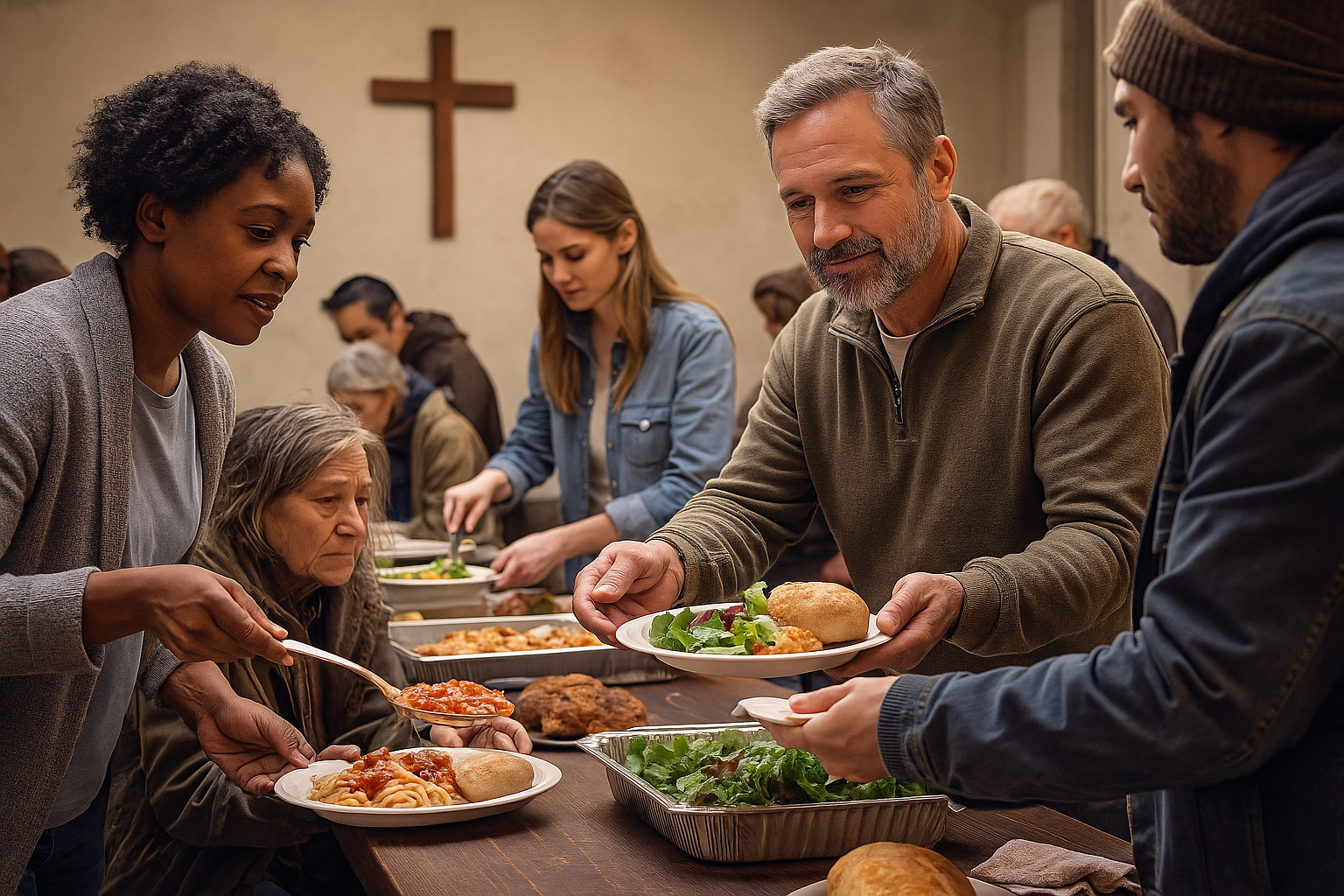
During the Great Depression, long before modern social programs were built out, local churches and neighbors became lifelines. Congregations opened their doors for soup lines, clothing drives, and orphan care. They didn’t hold debates on who deserved help—they simply obeyed Christ and served.
Today’s Moment
We’re watching another heated budget fight and shutdown debate. Public statements shift from day to day, and on-camera answers often contradict prior talking points. While leaders argue about expanding or limiting public aid—including hot-button questions around care for people who entered the country illegally—one stubborn fact remains: hurting people still need help right now.
The Church cannot outsource compassion to Congress. God has already assigned this work to His people.
Biblical Foundation (MEV)
“If a brother or sister is naked and lacking daily food, and one of you says to them, ‘Depart in peace, be warmed and filled,’ and yet you give them nothing that the body needs, what does it profit? So faith by itself, if it has no works, is dead.” — James 2:15–17 (MEV)
“For I was hungry and you gave Me food, I was thirsty and you gave Me drink, I was a stranger and you took Me in… Inasmuch as you have done it for one of the least of these, you have done it for Me.” — Matthew 25:35, 40 (MEV)
“Let us not grow weary in doing good, for in due season we shall reap, if we do not give up. Therefore, as we have opportunity, let us do good to all people, especially to those who are of the household of faith.” — Galatians 6:9–10 (MEV)
The Issue Behind the Issue
Politics can spotlight needs, but it cannot replace our calling. When the Church expects government to do the loving, believers slowly become spectators. Scripture never assigns the Great Commandment to a committee. It assigns it to disciples.
What This Looks Like in Real Life
- Personal responsibility: Keep a small mercy budget—cash or gift cards—to quietly meet needs you encounter (groceries, gas, prescriptions).
- Local church action: Strengthen benevolence funds, food pantries, and visitation teams. Pair relief (short-term help) with relationships (long-term discipleship).
- “All people”…with wisdom: Galatians 6:10 says to do good to all. Help with prudence—verify genuine need, avoid enabling harm, and keep Christ at the center.
- Start with the household of faith: Make sure no one in your congregation goes hungry, uncovered, or unseen (Acts 2:44–45; 1 John 3:17–18).
- Pray before you post: Exchange unfruitful debates for intercession and tangible service (2 Timothy 2:23–25, MEV).
Five Questions to Move You from Debate to Deed
- Who near me (family, church, neighborhood) has an immediate need this week?
- What can I do today that meets a bodily need (James 2:16)—food, clothing, transport, rent help?
- Which ministry in my church can I strengthen with my time, skills, or giving?
- Where have I been debating more than serving—and what one action will I take instead?
- How will I keep Christ visible so mercy leads to discipleship, not just handouts?
Closing Charge
No matter who wins the argument or when a budget passes, the mission of Jesus does not pause. Our neighbors cannot wait for a vote to be counted. Let’s be the people who show up.
“For we are His workmanship, created in Christ Jesus for good works, which God prepared beforehand, so that we should walk in them.” — Ephesians 2:10 (MEV)
© Your ministry. Scripture quotations taken from the Modern English Version (MEV). Used by permission.