
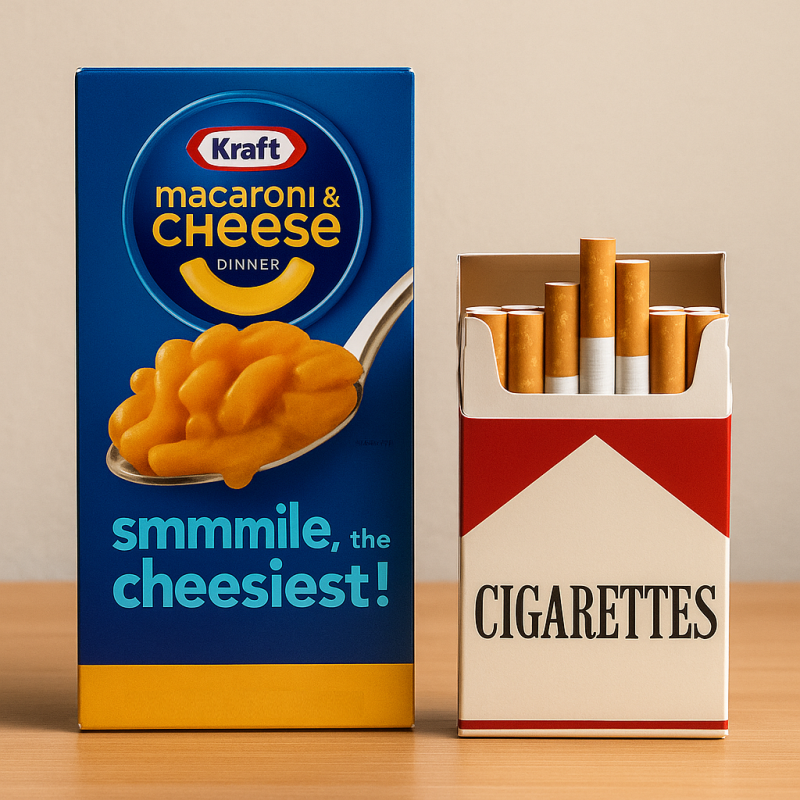
Why Big Tobacco Moved Into Food
Title: The Secret Ingredient: Why Big Tobacco Quietly Switched From Cigarettes to Food
INTRO
This is Part 1 of a story almost nobody knows — but once you hear it, everything about America’s modern food system starts to make sense.
You’ve probably heard the headlines:
San Francisco is now suing some of the biggest food companies in the country, claiming they engineered their products to be as addictive as cigarettes.
That sounds extreme, right?
But here’s the part that never gets mentioned:
The cigarette companies didn’t just influence the food industry.
They moved INTO it.
And the question everyone should be asking is why.
PART 1 — WHY BIG TOBACCO SWITCHED FROM CIGARETTES TO FOOD
Before we ever talk about who they bought or what they changed, we have to understand the moment everything flipped.
Because Big Tobacco didn’t move into food by accident.
It was survival.
Here’s what was happening behind the scenes:
1. The lawsuits were coming
By the late 1970s and early 1980s, internal memos inside the major cigarette corporations made one thing clear:
The legal storm was coming.
Public pressure was building.
Health research was piling up.
Politicians were sharpening their knives.
For the first time in decades, the cigarette business looked vulnerable.
2. The science exposed the addiction model
When nicotine addiction became undeniable, tobacco executives could see the writing on the wall:
The very business model they built — addiction, repeat use, flavor engineering — was about to become a legal liability.
So what do massive corporations do when their main product becomes politically radioactive?
They pivot.
3. They needed a new industry that worked exactly like cigarettes
The food industry was the perfect target.
Why?
Because food is:
-
cheap to make
-
high-margin when processed
-
consumed multiple times a day
-
emotionally rewarding
-
and best of all… it can be engineered
The addiction model they perfected with cigarettes could be copied — legally — with food.
And unlike nicotine, nobody could sue you for making food taste good.
4. They needed something politicians wouldn’t dare regulate
No senator is going to stand in front of a camera and say:
“We’re cracking down on pizza, crackers, mac and cheese, and breakfast snacks.”
Food was the safest, most politically protected industry in America.
And tobacco companies knew that.
5. They needed somewhere to park billions of dollars safely
These companies weren’t small operations — they were giant multinationals pulling in billions.
When it became clear cigarettes might get regulated, taxed, or litigated into the ground, they needed a new home for all that capital.
Processed food was:
-
scalable
-
global
-
low risk
-
impossible to ban
-
and fully legal
It wasn’t just a pivot.
It was self-preservation.
6. They weren’t entering the food business… they were REBUILDING it
This is the part everyone forgets:
They didn’t step into the food industry to play along.
They stepped in to reshape it using the same formula that worked for cigarettes:
-
craving cycles
-
addictive design
-
flavor science
-
psychological marketing
-
cheap ingredients with high repeat use
Their goal wasn’t to sell food.
It was to rebuild food into a consumer dependency.
COMING SOON – EPISODE 2
Now that you understand why Big Tobacco moved into food, the next question is the one everyone will want answered:
Which companies did they buy?
What brands did they control?
And what exactly did they change?
That’s where the story gets wild.
Part 2 drops soon.
#CampbellsSoup #Campbells #ProcessedFood #UltraProcessedFoods #FoodIndustry #FoodScandal #FoodLawsuit #BigFood #FoodAddiction #TobaccoHistory #FoodScience #HealthNews #BreakingNews #EricFGilbert #EricGilbert