When the Landmarks Vanish
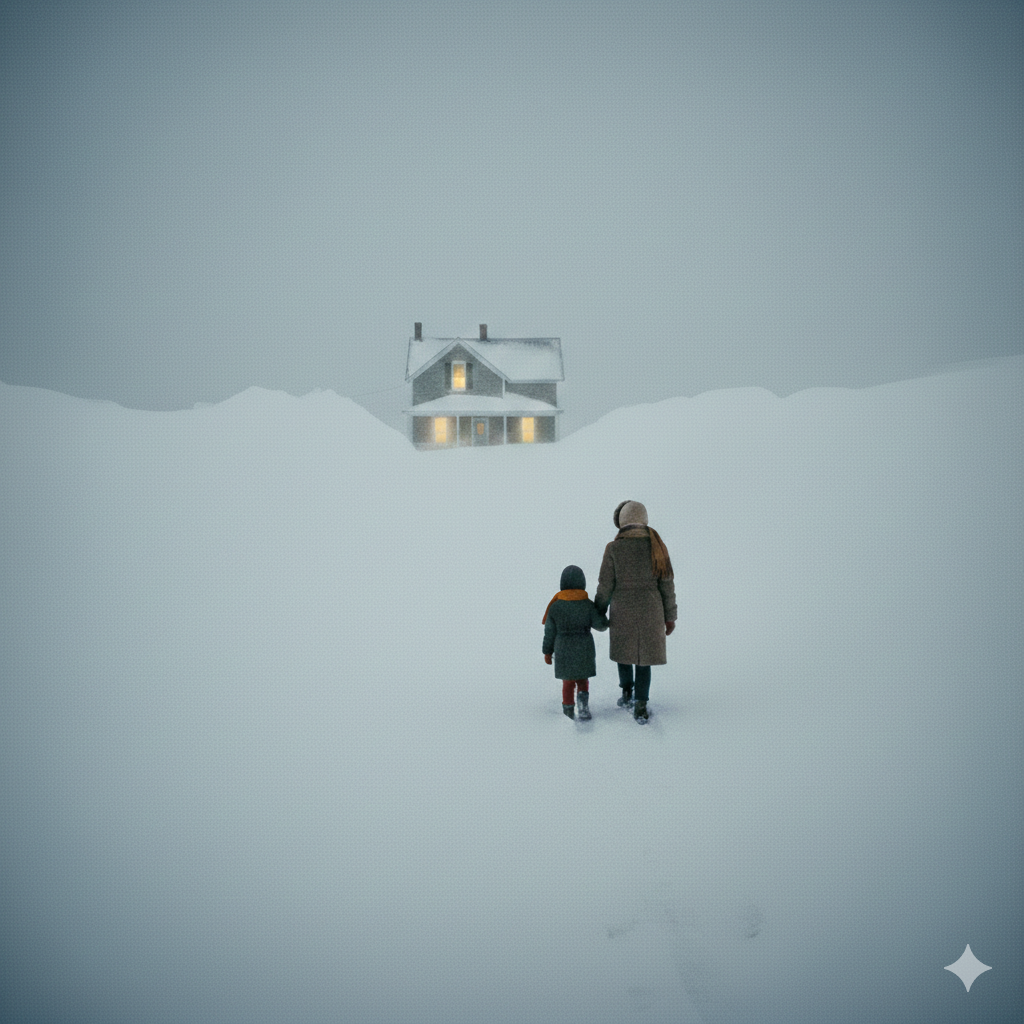
In the Great Blizzard of ’78, the world didn’t just get cold; it became unrecognizable. I remember as a child setting out with my mom from the farm early in the morning, hoping to keep the family bakery open. The snowdrifts were towering—20 feet high—creating walls of white that obscured the horizon.
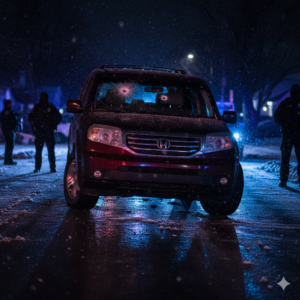
On the main highway, the road looked clear, but the “ditch” was full of evidence to the contrary. Cars were strewn everywhere, victims of the black ice. In a moment of vital discernment, my mother realized the goal wasn’t worth the risk and turned back. But the return was even harder. At the last stretch before our home, the wind had erased the boundaries. The road, the ditch, and the creek were all one flat, white expanse. We had to abandon the car and walk the rest of the way home, navigating a world where every familiar landmark had been buried.
II. The Current Event: A Crisis of Shelter
In 2026, we find ourselves in a cultural “whiteout.” The landmarks of truth are being buried. Most concerning is that even the Church—intended to be the “City on a Hill”—is often becoming part of the confusion. We see news reports of churches offering classes on how to protest or how to actively fight with law enforcement officers.
When the church house becomes a political training ground for conflict rather than a sanctuary for the weary, the “road” has truly been lost. Like the ice on the highway that looked like a clear path, these movements can look like “justice” or “safety,” but they often lead people into the ditch of bitterness and strife. We must ask ourselves: Is our shelter built on the Word of God, or the ideologies of the world?
III. The Word (MEV Translation)
Let us look at how the Scripture instructs us to find the true landmark when the world goes white:
1. The True Definition of a Sanctuary
“For in the time of trouble He shall hide me in His pavilion; in the secret place of His tabernacle He shall hide me; He shall set me up upon a rock.” (Psalm 27:5)
Notice where the hiding happens: in His pavilion and His tabernacle. A church’s purpose is to point us to the “secret place” of God’s presence, not to the frontlines of worldly disputes.
2. The Danger of Worldly Wisdom Just as those cars on the highway looked like they were on solid ground until they hit the ice, we must be careful of “shelters” that lead us into conflict.
“Remind them to be subject to principalities and powers, to obey magistrates, to be ready for every good work, to speak evil of no one, to be not brawlers, but gentle, showing all meekness to all men.” (Titus 3:1–2)
The Word reminds us that the mark of a believer in a storm isn’t being a “brawler,” but being “gentle.” If a “shelter” is teaching us to brawl, it isn’t the shelter of the Most High.
3. Walking by Faith, Not Sight When you walked home through those 20-foot drifts, you couldn’t see the road, but you knew the destination.
“The name of the Lord is a strong tower; the righteous run into it and are safe.” (Proverbs 18:10)
The “Strong Tower” isn’t a political movement or a social cause. It is the Name of the Lord. When the landmarks are gone, that is the only name that provides true safety.
IV. Closing Reflection
As you “bundle up” this week, be careful where you seek your warmth. A fire built of worldly anger will eventually burn the house down. Seek the warmth of the Holy Spirit. If you find yourself in a place where the lines between the “road” and the “ditch” are being blurred—even if that place calls itself a church—look to the Word.
Don’t be afraid to leave the “car” of your own understanding behind and walk toward the true Home. The drifts are high, and the ice is slick, but the Father is waiting at the door with the light on.