
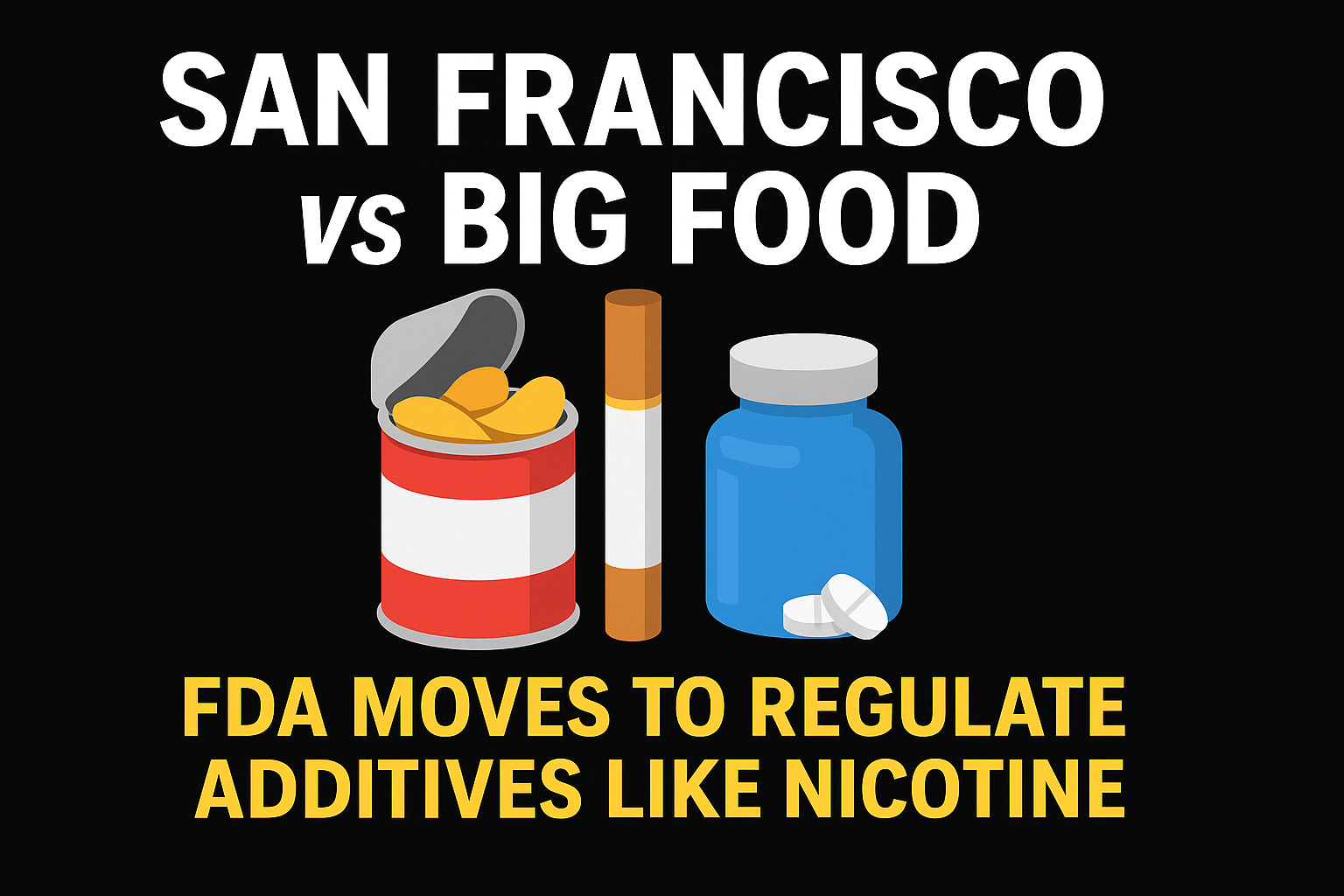
Q: Why is San Francisco suing Big Food?
A: The city argues that major food companies intentionally formulated ultra-processed foods to be addictive — using the same behavioral engineering strategies the tobacco industry used. Their lawsuit claims these companies knowingly accelerated obesity, chronic disease, and dependency for profit.
Q: How does the FDA tie into this?
A: Behind the scenes, the FDA has begun debating whether certain food additives — especially those used to intensify craving and override satiety signals — should be regulated the same way nicotine is. This includes additives used in snacks, cereals, frozen meals, and children’s foods.
Q: Why would the FDA compare food additives to nicotine?
A: Internal discussions (reported by industry observers) suggest that some additives influence the brain’s reward pathways in ways similar to nicotine. That doesn’t mean they’re chemically identical — it means they function similarly in terms of habit formation and repeat consumption.
Q: What does the tobacco industry have to do with food?
A: Everything.
After facing massive lawsuits in the 1990s, big tobacco companies invested heavily in food brands — acquiring or merging with companies behind America’s most widely consumed snacks. They brought decades of addiction science with them.
Food didn’t naturally evolve into what it is today — it was engineered.
Q: So it’s not that consumers changed… the food changed?
A: Correct.
Ingredients, textures, additives, and ratios were redesigned to maximize “bliss point,” override fullness, and trigger compulsive eating patterns. This mirrors tobacco’s strategy: create a product people struggle to quit.
Q: Why isn’t this bigger news?
A: Because the companies involved have billions in advertising relationships with media outlets. It’s easier to report on “personal responsibility” than corporate manipulation.
Q: What happens if San Francisco wins?
A: It could open the door to:
-
Reformulation of major food brands
-
Disclosure laws similar to tobacco warnings
-
New classifications for “habit-forming foods”
-
FDA restrictions on additives historically treated as “safe”
This lawsuit could reshape the entire U.S. food industry.
Q: What should consumers look out for?
A: Foods with long ingredient lists, “flavor enhancers,” emulsifiers, artificial colors, and additives designed to boost texture or craveability. These are the products at the center of the legal fight.
Q: What’s next in the series?
A: Part 4 will break down exactly which companies the tobacco industry bought, when it happened, and how those mergers changed the American diet forever.
Follow the series to see how deep this goes.
#BigFood #FoodAdditives #FDANews #FoodIndustrySecrets #SanFranciscoNews #HealthScandal #TobaccoIndustry #FoodScience #BreakingNews #FoodLawsuit #NutritionFacts #EricGilbert