Cousins of Abraham: Israel, Palestine & Why the Conflict Endures
Q: What is “Palestine,” exactly?
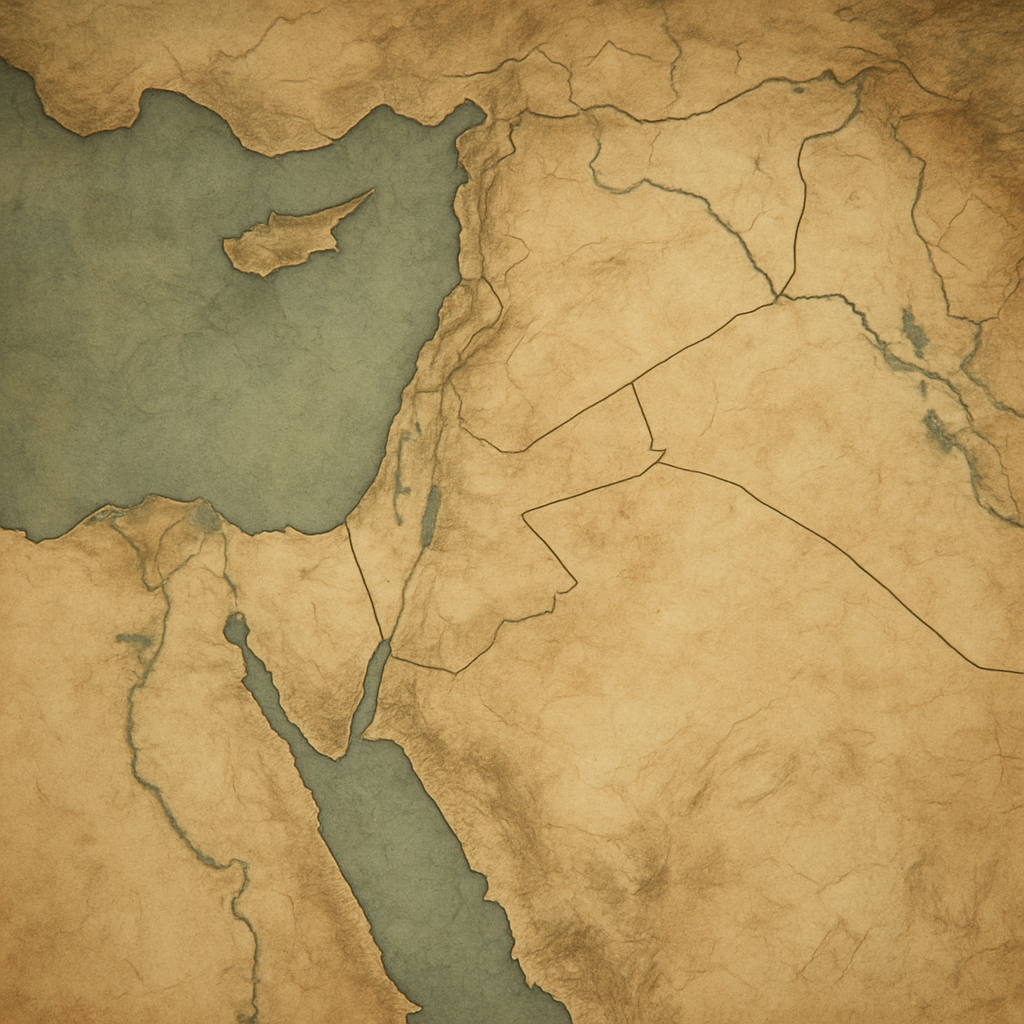
A: The land was ancient Judea, home of the Israelites. After crushing a Jewish revolt in 135 A.D., the Roman emperor Hadrian renamed the province Syria Palaestina—a political rebrand meant to erase “Judea” from the map. That’s the origin of the name Palestine.
Q: Who are the Palestinians and where did they come from?
A: Over centuries—Byzantine Christian, then Muslim Arab, then Ottoman rule—the local population became largely Arabic-speaking and Muslim, though still Semitic. Their descendants are today’s Palestinian Arabs. Small Jewish communities remained in places like Jerusalem, Tiberias, Safed, and Hebron the entire time.
Q: Don’t Jews and Arabs both descend from Abraham?
A: Yes. Biblically and traditionally, Jews trace through Isaac and Arabs through Ishmael—both sons of Abraham. They are cousins by ancestry, which is why many emphasize the possibility of peace despite deep political disagreements.
Q: What do Jews mean by the “Promised Land”?
A: For Jews, the land of Canaan (later Israel/Judea) is the Promised Land tied to Abraham’s covenant. They lived there for centuries before conquests and dispersions, culminating in the Roman expulsions. Modern Israel views statehood as the recovery of that ancestral homeland and the need for secure, recognized borders.
Q: Did Arabs have a similar ‘promised land’ doctrine?
A: Not in the same theological sense tied to this specific territory. Arabs inhabited and administered the region for over a millennium after late-antique conquests. Palestinians claim the land by continuous residence and community life that developed there over many generations.
Q: How did the modern conflict ignite?
A: After WWI, Britain controlled the area (the Mandate for Palestine). In 1947, the UN proposed two states—one Jewish, one Arab. Jewish leaders accepted; Arab leaders rejected. When Israel declared independence in 1948, war followed. Israel survived and expanded beyond the UN map; roughly 700,000 Palestinian Arabs fled or were expelled, creating a lasting refugee crisis.
Q: Why has the fighting continued for decades?
A: Core disputes remain unresolved: sovereignty (statehood for Palestinians), borders & security (for Israel), the status of Jerusalem and holy sites, and the fate of refugees. Both sides see powerful historic, moral, and security claims over the same land.
Q: Is there a simple bottom line?
A: The name “Palestine” began as a Roman renaming of Judea. The land is the same ancient homeland of the Jews. The Palestinians are largely Arabized locals whose ancestors lived there for centuries. Both peoples descend from Abraham. They’re cousins—two branches claiming the same home—so peace requires recognizing each other’s roots and rights.