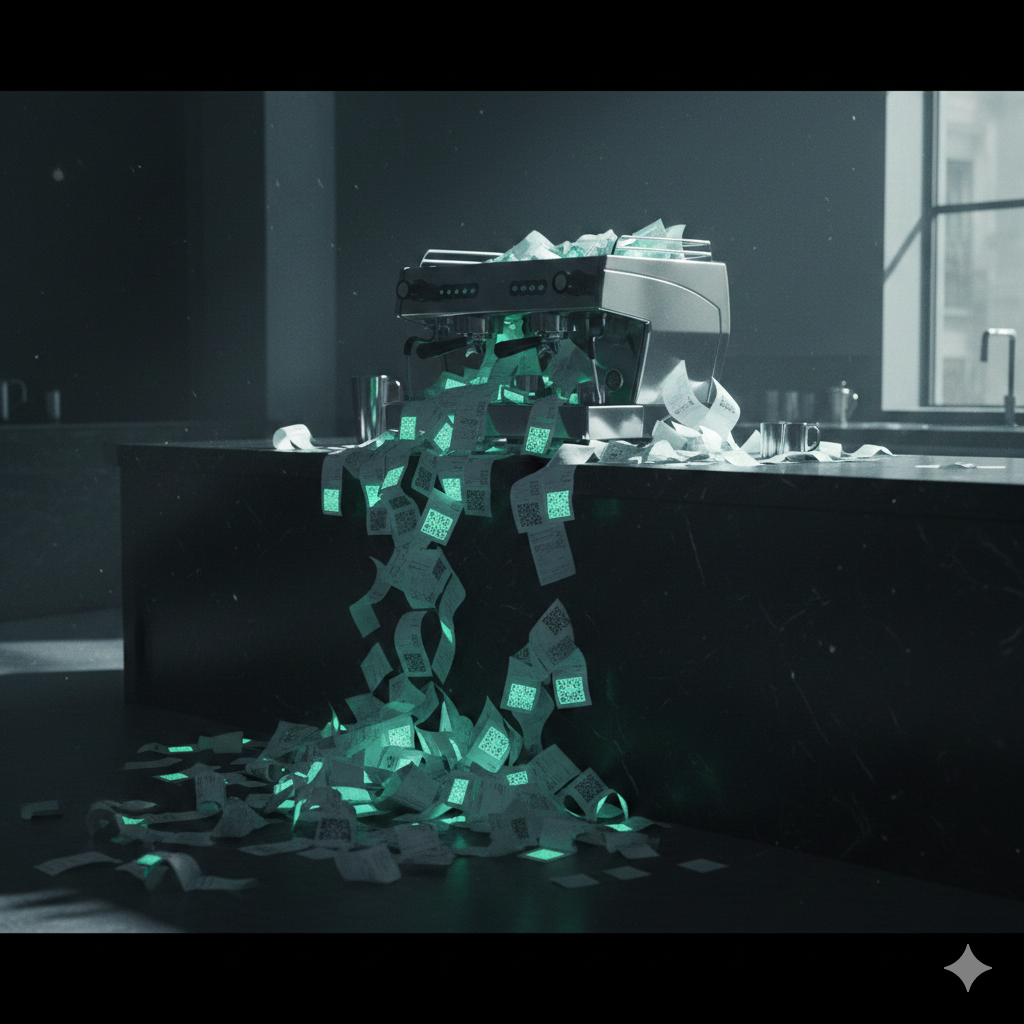
I’m looking at the Starbucks “Siren Craft System” rollout and I don’t see news; I see a 10-second leak. For years, the coffee giant has been drowning in its own success. Their mobile app turned a premium experience into a chaotic waiting room. But this isn’t a new problem, and it isn’t unique to Seattle. It’s the same mechanical failure I saw in a Florida bait shop back in the nineties.
Back then, a bait shop was a place of high friction. On a busy morning, you’d have a line out the door and down the street with people waiting thirty minutes or more just to get shrimp. The shop was packed, but nobody was buying tackle or high-margin gear because they couldn’t move. The bottleneck was the shrimp. The shrimp came in as a “wild mix,” just whatever and however the shrimper caught them the night before, and every customer had a different, subjective idea of what they wanted. They’d ask for “selects” or “jumbos,” or “hand picks”, or “mediums” and the staff would waste precious minutes—the 10-second leak— trying to figure out what each customer meant by his coded order, then hand-sorting on the fly while the line grew. We had as many staff members as we could fit behind the counter trying to speed things up. Each member would take and order, go sort it, ring it up. Orders were wildly inconsistent, we were bumping into each other. It was horrible!
The solution wasn’t more staff. We couldn’t fit any more people back there! It was a systemic audit of the matter at hand. I had one person come in an hour early to sort the shrimp by size. By coming in early and pre-sorting the shrimp into defined categories—small, medium, large, and jumbo—the shop eliminated the “negotiation” at the counter. The line moved. But here is the real kicker: that one hour of pre-sorting by a single employee allowed the entire shop to be run by just two people. Before the change, it took five or six people just to manage the chaos.
The “shrimp sales” as a percentage of the total dropped from 80% to 60%, but total revenue skyrocketed by 30% because customers finally had the breathing room to buy tackle.
This is the exact wall Starbucks has hit. Their “shrimp” is the infinite customization of the mobile app. When every drink is a “select,” the line stops moving, and your labor costs explode as you try to “staff up” to meet the confusion. The Siren Craft System is their attempt to pre-sort the workflow, reconfiguring the physical space to match the digital demand.
Whether you are a global brand or a small business plan in Florida, this is how you lose your shirt: you focus so hard on the “order” that you ignore the “friction.” Many owners think the answer is to simply boost website traffic or spend more on advertising. They want more people in the door. But if your internal “tanks” aren’t sorted, more traffic just means a longer line, higher labor costs, and more frustrated customers who will never see your high-margin “tackle.”
I’ve seen this at D3CS Consulting time and again. A proposed business looks great on a spreadsheet, but fails in the dirt because the owner hasn’t accounted for the 10-second leak at the point of fulfillment. Eric Gilbert often talks about the “integrity of the engine.” If you have a leak in the fuel line, it doesn’t matter how high-octane the gas is. Often times the very thing that is keeping you from growing your business is not marketing or more staff, but finding and implementing the right systems for your business at the size that it needs to grow to. What worked yesterday, is probably not the same system you need to reach next years goals.
VizzyBrand Marketing can get the people to your door. They can build the awareness and create the desire. But if your system is built on “random scoops” instead of “sorted tanks,” you are just paying to frustrate your neighbors. To truly improve website traffic, you have to ensure the destination is worth the trip. If the customer arrives and encounters a thirty-minute wait for a “select” experience, they aren’t coming back.
The bait shop didn’t just change how they sold bait; they changed how the entire business breathed. Two years later, every shop in the area was copying them. Why? Because efficiency is contagious. When you stop the leak, you stop the bleeding of cash and start the flow of profit.
Q: How does a small business identify a “10-second leak” without a consultant? You look at where the talking happens. If your staff is spending ten seconds explaining a policy, sorting a “random” variable, or apologizing for a delay, that is your leak. In a small business plan, these seconds are your most expensive overhead.
Q: Can you increase website traffic while having a bottleneck? You can, but you shouldn’t. Pumping more people into a broken system is the fastest way to kill a reputation. You need to audit the “throughput” before you turn on the “input.”
Q: What is the first step in a proposed business audit? We look at the hand-off. Where does the “promise” meet the “product”? If there is any hesitation there, that is where we start the repair.
Q: Does VizzyBrand Marketing handle the internal systems? VizzyBrand brings the awareness and ensures the brand promise is clear. They make sure the world knows your “shrimp are sorted.” D3CS Consulting is the team that actually gets in the tanks to fix the dividers.
Q: Why do most owners ignore these leaks? Because they are busy “scooping shrimp.” They are so buried in the daily grit that they can’t see the line out the door is actually a sign of failure, not just success.
If you’re running a business and you haven’t audited your 10-second leaks, you don’t have a plan; you have a hope. VizzyBrand brings the awareness, but D3CS builds the engine. DM me ‘Audit’ and let’s see where you’re bleeding.
#EricGilbert #D3CSConsulting #VizzyBrandMarketing #SmallBusinessPlan #ProposedBusiness #BoostWebsiteTraffic #starbucks