The Ghost in the Machine: Why Your Robotaxi is Actually a Gig Worker in Disguise
The sleek, white sensors spinning on top of a Waymo vehicle are designed to signal one thing: the future has arrived. We are told these vehicles are the pinnacle of autonomous vehicles, capable of navigating complex urban environments with what the marketing departments call superhuman AI. But as any local in San Francisco or Austin will tell you, the reality is much clunkier.
Following the massive electrical grid failure that paralyzed San Francisco earlier this month, the “autonomous” facade finally crumbled. Thousands of robotaxis froze. They didn’t just slow down; they “bricked,” blocking emergency vehicles and creating a gridlock that looked like a scene from a post-apocalyptic movie. But while the mainstream media focused on the traffic, we looked at the Honk app.
The Secret “Panic Button” for Big Tech
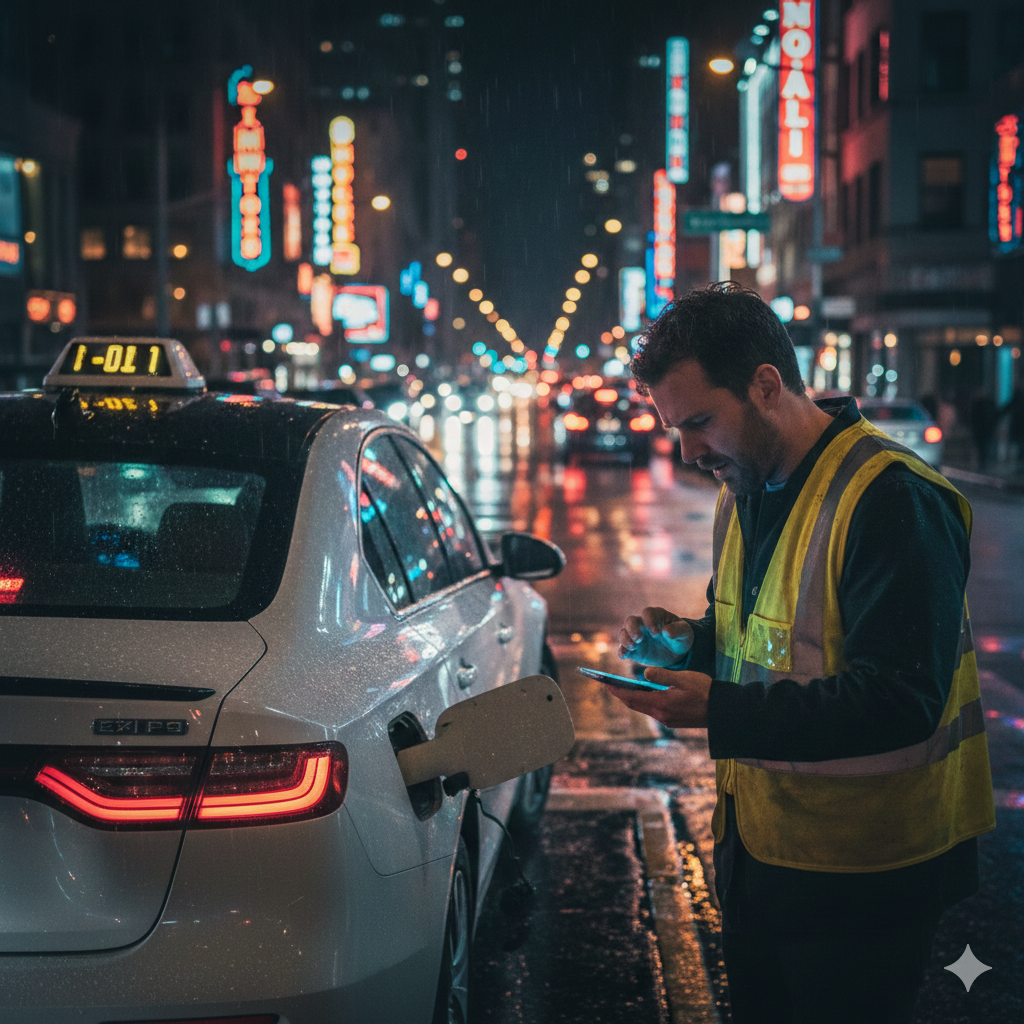
Honk was originally a roadside assistance platform for everyday drivers. However, insiders and gig workers are now blowing the whistle on a new “priority” contract that has nothing to do with flat tires on a Ford F-150. When a robotaxi stalls, the company doesn’t always send a specialized engineer in a branded van. They ping the Honk app.
A nearby gig worker—often an Uber or Lyft driver looking for extra cash—gets a notification to “reset” or “recover” a stalled vehicle. This is the toddler in a Ferrari in action. The car has all the power in the world, but it doesn’t have the “common sense” to handle a dark traffic light or a stray traffic cone. When the “toddler” gets scared, a human has to come hold its hand.
Why AI Isn’t Replacing Humans—It’s Just Demoting Us
There is a pervasive fear in the workforce revolution that robots are coming for our livelihoods. But if you look at the Honk app leaks, a different, more cynical reality emerges. AI and robotics and automation are far away from being able to replace humans; instead, they are changing the human function into something far more invisible and underpaid.
The Shift from “Driver” to “Ai Janitor”
In the old world, a human was the pilot of the vehicle. In the new world of autonomous vehicles, the human has been moved from the driver’s seat to the “shadow workforce.” These devices cannot operate without human input. When a Waymo car gets stuck because of a “visual hallucination” (like mistaking a reflection for a brick wall), the AI doesn’t solve the problem—it simply stops.
At that moment, the job of the human changes. They aren’t “replacing” the driver; they are becoming the “janitor” for the AI’s mess. They are the ones who have to drive across town, manually override the software, and clear the path. The tech giants are essentially turning high-skill driving jobs into low-wage “recovery” tasks.
The Myth of Total Autonomy
We are told that innovation means efficiency. But if a billion-dollar machine requires a $20-an-hour gig worker to follow it around and fix its basic mistakes, is it actually efficient? This is the core of the tech scandal. These companies are selling the appearance of autonomy to investors while relying on a massive, hidden network of human labor to keep the wheels turning.
This is why we say AI is a toddler in a Ferrari. You can give the machine all the horsepower in the world, but without the nuanced judgment of a human being, it’s just a dangerous toy. The human element isn’t being removed; it’s being hidden to keep stock prices high and AI safety stats looking perfect for the CPUC and DMV regulators.
Uncovering the Tech Scandal
Why is this being called a tech scandal or even data fraud? This is the heart of the issue. In California, companies are legally required to report “disengagements”—times a human has to take over the controls for safety reasons. These stats are used to prove that AI safety is improving. However, by outsourcing the “fix” to a third-party app like Honk, companies can technically claim the autonomous system didn’t fail; it just required “external maintenance.” This artificially inflates their safety data and keeps their stock prices high while misleading the CPUC and DMV regulators.
What did the San Francisco blackout reveal about these devices? It revealed that self-driving cars cannot handle “edge cases.” When the lights went out, the cars panicked. Because there weren’t enough “parents” (the Honk workers) to go around, the city stayed paralyzed for hours. It proves that robotaxis are not independent; they are high-maintenance pets that require a massive, hidden infrastructure of human labor to stay “autonomous.”
Is this the end of the driverless car dream? Not necessarily, but it’s the end of the narrative that AI will replace humans. These devices simply cannot operate without human input. Whether it’s a Tesla robotaxi or a Zoox pod, the goal isn’t to remove the human; it’s to hide the human so the company doesn’t have to pay for benefits or a living wage. We are seeing a gig economy scandal where the most advanced tech in the world is being propped up by people making $20 a “rescue.”
Are these machines ever going to be truly autonomous? The potential for robotics and automation is great, but as we’ve seen with the Tesla robotaxi and Zoox failures, we are decades away from a machine having “common sense.” These devices will always need a human in the loop. The question is: will those humans be paid a fair wage as “operators,” or will they be exploited as “shadow workers” on apps like Honk?
What does this mean for the future of work? It means the fear of “replacement” is a distraction. The real threat is “degradation.” Your job might not disappear, but your status might. We are moving from a world of professionals to a world of “AI babysitters.” This gig economy scandal is just the beginning.
How does this connect to the “Toddler in a Ferrari” analogy? It’s about the gap between power and judgment. An AI can process millions of data points, but it can’t figure out what to do when a trash bag blows across a sensor. It has the horsepower of a Ferrari but the situational intelligence of a two-year-old. This is why the future of work isn’t about robots taking over; it’s about robots changing the nature of human work into “shadow labor.”
The Reality of Shadow Labor
We need to stop falling for the AI hype. If a car can’t handle a power outage without a gig worker driving 10 miles to close its trunk, it’s not a driverless car—it’s a remote-controlled toy. We are the first to bring you this breaking news because the major outlets are too afraid of losing their access to Silicon Valley. But here, we look for the unfiltered truth.
The San Francisco blackout was a stress test that the industry failed. The robotaxi failure wasn’t just a technical glitch; it was a proof of concept for why the “fully autonomous” dream is currently a lie. Meanwhile, the Uber drivers and gig workers—the very people the tech giants want to “disrupt” out of existence—were the ones keeping the city moving.
This is a classic Silicon Valley scam. They sell the “solution” (AI) while secretly relying on the “problem” (human labor) to make it work. As we continue our tech exposed series, we will be looking closer at the innovation fraud occurring in our streets. The more “autonomous” they say it is, the more humans they are likely hiding in the trunk.
For those following the workforce revolution, this is the front line. It’s not about machines vs. humans; it’s about corporate transparency vs. digital fraud. We’ll be here to report the unbiased news as more whistleblowers from the Honk app come forward to tell their side of the story.
RobotaxiScandal #WaymoFail #GigEconomy #AIFraud #SanFranciscoNews #TechExposed #AutonomousVehicles #HonkApp