
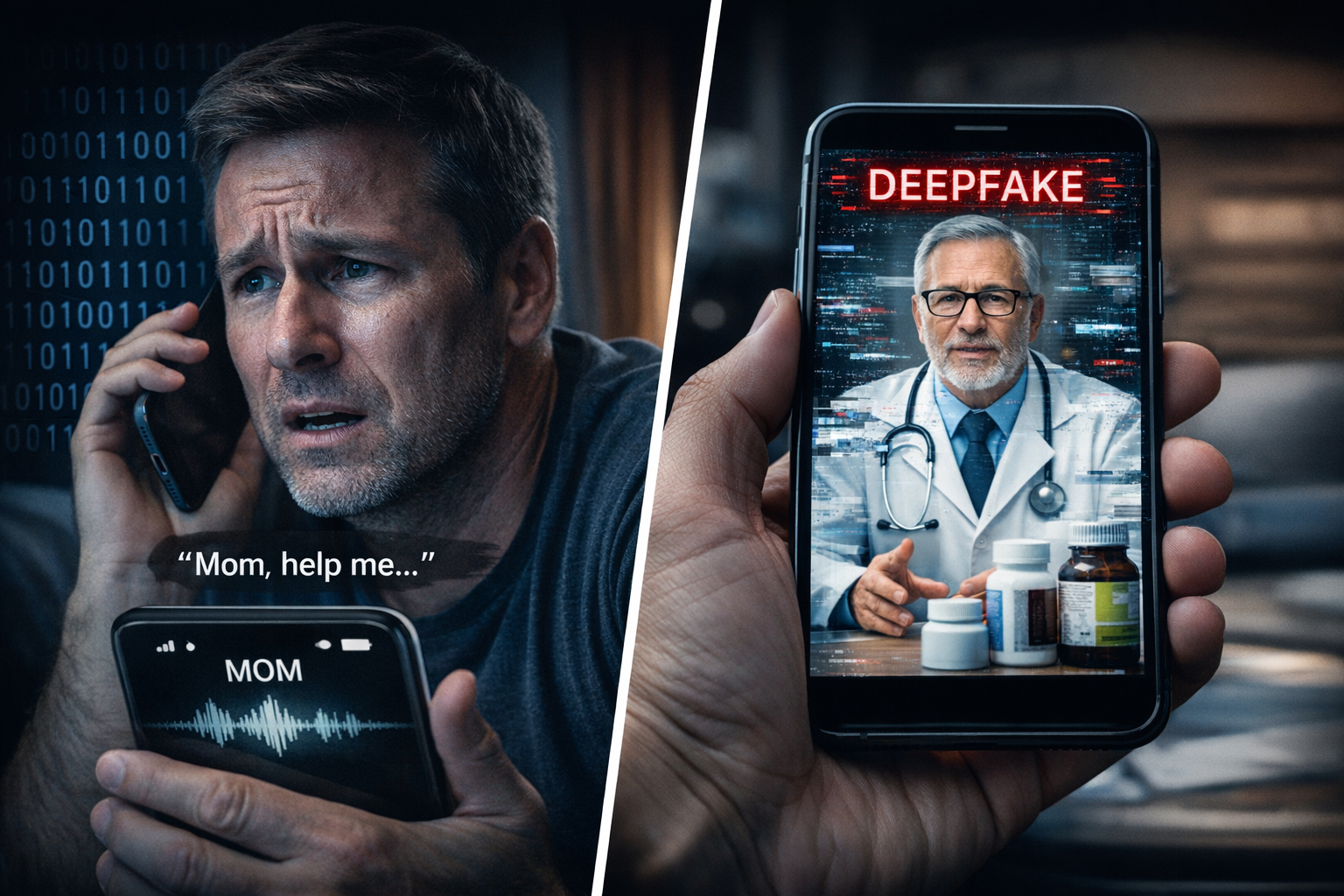
What if scammers don’t need your child… only their voice?
A new wave of scams is spreading that relies on AI impersonation, not physical kidnapping or real credentials. Criminals are now cloning voices using short audio clips pulled from social media and pairing that technology with deepfake videos that impersonate doctors, professionals, and authority figures.
This combination is dangerous because it attacks trust and panic at the same time.
How does the “AI voice kidnapping” scam work?
Scammers collect short voice clips from:
-
TikTok videos
-
Instagram stories
-
Voicemails
-
Live streams
With as little as 5–10 seconds of audio, AI tools can replicate a person’s voice convincingly.
The scam usually plays out like this:
-
You receive a call that sounds exactly like your child or loved one
-
The voice claims they’ve been kidnapped or hurt
-
A second voice takes over and demands money
-
You’re told not to hang up or call police
The goal is to keep you in panic mode, where verification never happens.
Are these calls real kidnappings?
In most reported cases, no physical kidnapping occurred.
The crime is extortion using AI impersonation.
That doesn’t make it less dangerous. Victims have sent thousands of dollars before realizing the person was never in danger.
What about the fake doctors online?
At the same time, AI-generated videos are being used to impersonate:
-
Real doctors
-
Health experts
-
Public figures
These deepfakes are often used to:
-
Sell supplements
-
Push miracle cures
-
Promote sketchy health products
The videos look real. The voices sound real.
But the people don’t exist — or never said what’s being shown.
Platforms remove some of these videos, but new ones appear constantly.
Why are these scams working so well?
Because they exploit two things:
-
Emotional urgency (fear for your child, health anxiety)
-
Authority trust (doctors, professionals, familiar voices)
AI doesn’t need to be perfect — it only needs to be convincing long enough for someone to act.
How can you protect yourself and your family?
-
Never react to a panic call without verification
-
Hang up and call your loved one directly
-
Establish a family “safe word”
-
Be skeptical of medical advice from social media videos
-
Don’t trust a face or voice alone anymore
Verification beats panic every time.
Is this the future?
No.
This is already happening — and it’s accelerating.
The biggest risk isn’t AI itself.
It’s how fast criminals are learning to weaponize trust.