
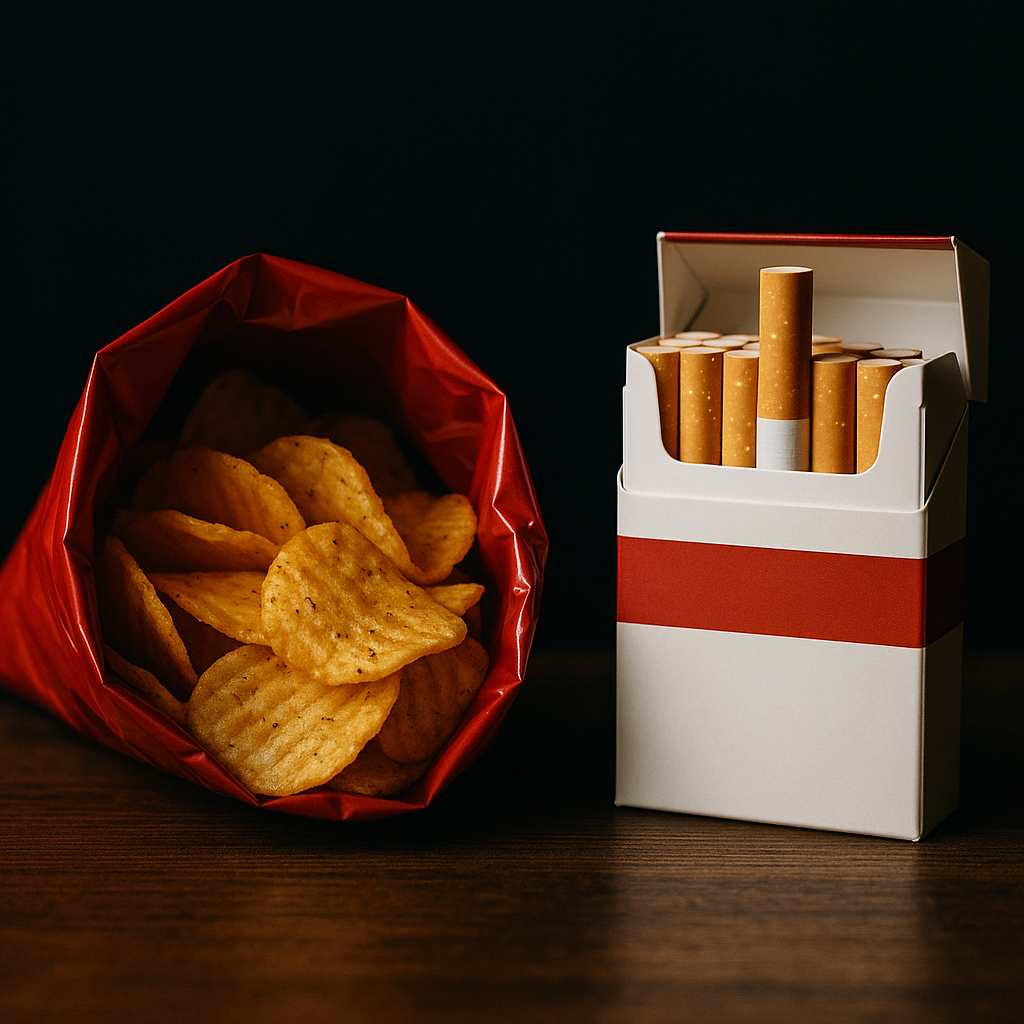
Q: What changed when tobacco-connected companies bought major food brands?
A: The moment the acquisitions went through, the formulas changed.
Internal R&D teams shifted focus from nutrition and cost… to craving cycles and repeat consumption.
This is where “bliss point” engineering exploded — using precise ratios of sugar, salt, and fat designed to trigger dopamine spikes identical to nicotine triggers.
Q: How does this connect to the San Francisco lawsuit?
San Francisco argues that ultra-processed foods were engineered to create dependence — not simply over-eating.
The lawsuit claims:
-
Chemical combinations were tested for reward-loop activation
-
Children were intentionally targeted because their dopamine pathways are easier to manipulate
-
Companies used documented tobacco-era addiction models to shape food behavior
This is the first lawsuit to legally compare processed food addiction to cigarette addiction.
Q: Is there proof the formulas were intentionally engineered?
There are multiple signals:
-
Tobacco scientists were rehired inside food labs
-
Patents describe “craveability enhancements”
-
Corporate memos discuss “reward optimization”
-
Additive blends mimic nicotine’s fast spike → fast crash cycle
While the lawsuit has not yet released discovery documents, early filings paint a clear picture of intent, not accident.
Q: Why didn’t the FDA stop any of this?
Because the FDA allowed Big Food companies to self-declare ingredients as GRAS (“Generally Recognized As Safe”).
This loophole allowed companies to:
-
Introduce new additives
-
Combine chemicals in novel ways
-
Engineer hyper-palatability
-
Avoid long-term health studies
This is the same regulatory blind spot tobacco exploited for decades.
#EricFGilbert #EricGilbert #BigFood #UltraProcessedFoods #FoodAddiction #FDAscandal #TobaccoPlaybook #ProcessedFoodLawsuit #EngineeredAddiction #FoodIndustryExposed